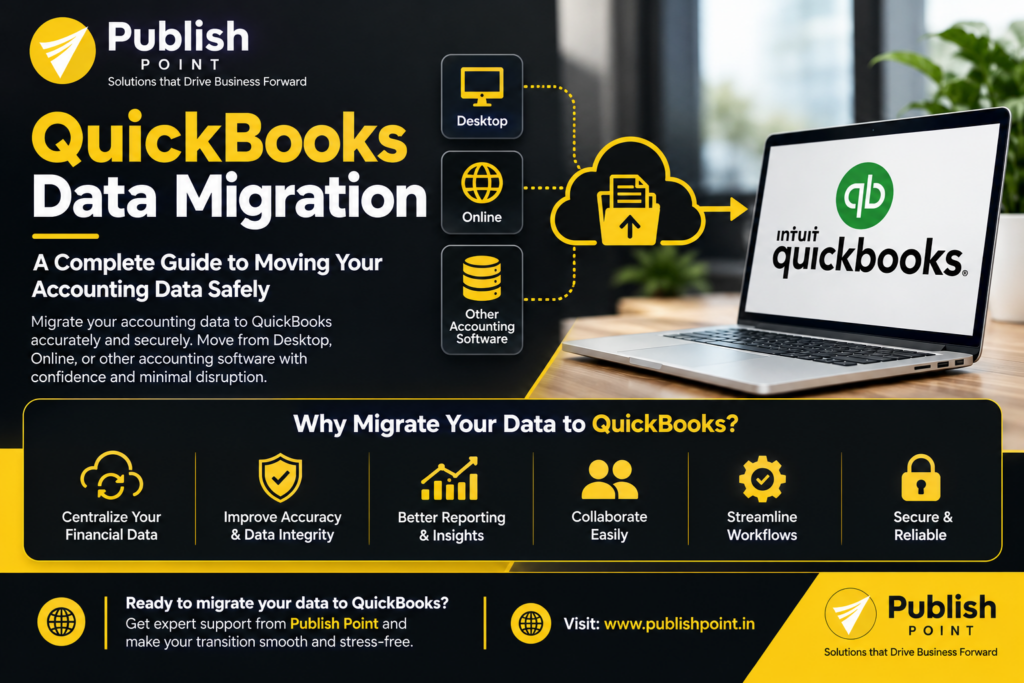
Best QuickBooks Data Migration: A Complete Guide to Moving Your Accounting Data Safely
Managing financial information across different accounting systems can be challenging for growing businesses. Whether you are switching accounting software, upgrading from QuickBooks Desktop to QuickBooks Online, or consolidating financial records from multiple platforms, moving your data accurately is essential. QuickBooks data migration helps businesses transfer financial information from one accounting system to QuickBooks while maintaining organized records and supporting business continuity. However, a successful migration requires more than simply transferring files. It involves data preparation, account mapping, validation, and testing to ensure your financial information remains accurate and accessible. In this guide, we will explain what QuickBooks data migration involves, common migration challenges, the key steps in the process, and how professional migration support can help your business make the transition smoothly. What Is Data Migration? QuickBooks data migration is the process of transferring financial and accounting information from an existing system into QuickBooks Desktop or QuickBooks Online. Depending on your business requirements and source accounting software, the migration may include: The exact data that can be transferred depends on the source platform, the QuickBooks destination, file compatibility, and the migration method used. A well-planned QuickBooks data migration helps businesses maintain financial continuity, reduce manual data entry, and organize their accounting information within their new system. Why Do Businesses Need QuickBooks Data Migration? Businesses migrate accounting data for several reasons. Understanding your objectives before starting the process helps determine the right migration approach. 1. Moving From QuickBooks Desktop to QuickBooks Online Many businesses consider moving from QuickBooks Desktop to QuickBooks Online to access cloud-based accounting features and work with financial information remotely. This transition requires careful preparation to ensure that supported company data, account balances, transactions, and other relevant records are transferred correctly. 2. Switching From Another Accounting Software Businesses using Sage, Xero, or other accounting platforms may want to move their financial operations to QuickBooks. During this process, account structures, transaction formats, tax settings, and customer or vendor records may differ between systems. Proper data mapping helps address these differences before importing the information. 3. Improving Financial Record Management Some businesses have years of accounting information spread across spreadsheets, accounting applications, and separate company files. Migrating the required data into QuickBooks can help centralize financial records and create a more consistent accounting workflow. 4. Supporting Business Growth As businesses expand, their accounting requirements may become more complex. A planned migration can help align accounting processes with changing operational needs, reporting requirements, and financial management workflows. QuickBooks Data Migration Common Challenges in QuickBooks Data Migration Although data migration offers several benefits, the process can create problems when it is not handled correctly. Inconsistent or Duplicate Data Customer names, vendor records, and account details may be duplicated or formatted differently in the source system. Importing these records without reviewing them can create unnecessary clutter in QuickBooks. Solution: Clean and standardize the source data before migration. Identify duplicates and agree on consistent naming conventions. Incorrect Account Mapping Different accounting platforms may use different account names, numbering systems, or account classifications. Mapping accounts incorrectly can affect how transactions appear in financial reports. Solution: Review the source chart of accounts and map each relevant account to the appropriate QuickBooks account before transferring the data. Missing or Incomplete Transactions Certain transaction types, attachments, custom fields, or historical details may not transfer directly between platforms. Solution: Identify the required records in advance, confirm compatibility, and determine whether additional conversion or manual handling is necessary. Incorrect Opening Balances Opening balances must align with the approved financial records as of the migration date. Errors can affect the balance sheet, accounts receivable, accounts payable, and subsequent reconciliation activities. Solution: Record the starting balances, reconcile relevant accounts, and compare the results after migration. Business Disruption An unplanned migration can interrupt invoicing, payment processing, reporting, and other accounting activities. Solution: Establish a migration schedule, communicate responsibilities, and plan the transition around important accounting deadlines. Step-by-Step QuickBooks Data Migration Process A structured migration process helps reduce errors and makes it easier to identify and resolve issues. Step 1: Assess Your Existing Accounting System Begin by identifying your current accounting software, the version you use, the volume of financial data, and your target QuickBooks product. Determine which records must be transferred, how much historical information is required, and whether any data needs to be archived rather than migrated. Step 2: Back Up Your Accounting Data Create a secure backup of your existing accounting records before making changes. The backup provides a reference point if you need to investigate discrepancies or restore information during the migration process. Restrict access to financial files and use appropriate security measures when sharing data with migration specialists. Step 3: Clean and Prepare the Data Review customer and vendor records, account balances, transaction dates, and duplicate entries. Resolve known discrepancies where possible. This preparation helps reduce the risk of carrying inaccurate or unnecessary information into QuickBooks. Step 4: Map Accounts and Transactions Match the source system’s accounts and data fields with their appropriate destinations in QuickBooks. Pay particular attention to account classifications, tax-related information, payment records, inventory data, and outstanding balances. The mapping process should reflect your business’s accounting requirements rather than relying on assumptions. Step 5: Perform the Data Migration Transfer the approved information using a migration method appropriate for your source system and QuickBooks destination. Depending on the project, this may involve built-in conversion tools, supported imports, third-party migration utilities, or specialized data conversion. Not every accounting platform supports a direct or complete transfer, so the process should be selected after reviewing compatibility. Step 6: Validate the Migrated Data After the migration, compare the results against your original accounting records. Important checks include: Investigate any differences before relying on the migrated data for ongoing accounting activities. Step 7: Test Your Accounting Workflows Before fully transitioning, test the activities your team performs regularly, such as creating invoices, recording payments, entering bills, generating reports, and reviewing account balances. Once the data and workflows have been checked, establish a clear transition date and procedures for handling any remaining records.
Best QuickBooks Data Migration: A Complete Guide to Moving Your Accounting Data Safely Read More »